My tank feeds a pump so that it has enough pressure to supply the home. And it has two isolator valves, one for the municipal supply and one on the output side of the pump. (OK it has more, but these are the relevant ones here).
The usual situation is that one of those valves is closed and one is open, so that the house uses one supply or the other.
Question: If I have them both open, can the water from the municipal side push back against the pump and cause damage?
The pump is a JoJo with a control panel on it. Variable speed. One can hear the pitch of the whine changing.
Not a problem as I see it but better to use a changeover valve (one outlet and 2 inlets)
The only issue I’ve had is with single phase pumps is if you power up the pump when it’s running in reverse (driven from the pump) it will then continue to run in reverse..
Will it go back to turning the correct direction after you stop and power it up again? I have a motor which blew a cap and after that it started turning in the wrong direction and I could not get it to swop over again at the time.
There are two ways a single phase motor can be made to go the right way.
On larger motors, you physically wind a second winding on at a 90° angle, and use a capacitor to create out of phase current, to create the slip needed to drive the motor in that direction.
On smaller motors (desk fans, etc), an extra winding is wound around one of the poles, with a capacitor connected to create an out-of-phase current. This causes just enough slip to make the motor want to go in one direction.
Such a larger motor with an auxiliary/starting winding can only turn in the direction that its physical construction allows for. You can overpower it and cause it to run the other way, but after correcting any problems, it should always return to the original direction.
This is all head knowledge for me though. Practically? Not much experience.
I just checked the manual for the pump. It can pump in either direction, but the default setting is from the tank to the property.
Currently I have a timer that just turns the pump off at a certain time each evening. This is partly to be considerate to neighbours, partly because every now and then it decides to run at 2 or 3 in the morning when I think such noise is really a bit too much (I may be being a bit too sensitive, but I’d rather err on that side).
The problem with this arrangement is that we have no pressure from the pump from about 22:30 to 7:30. Most days there is enough supply available that we can make coffee early in the morning if we want. There is not enough to shower.
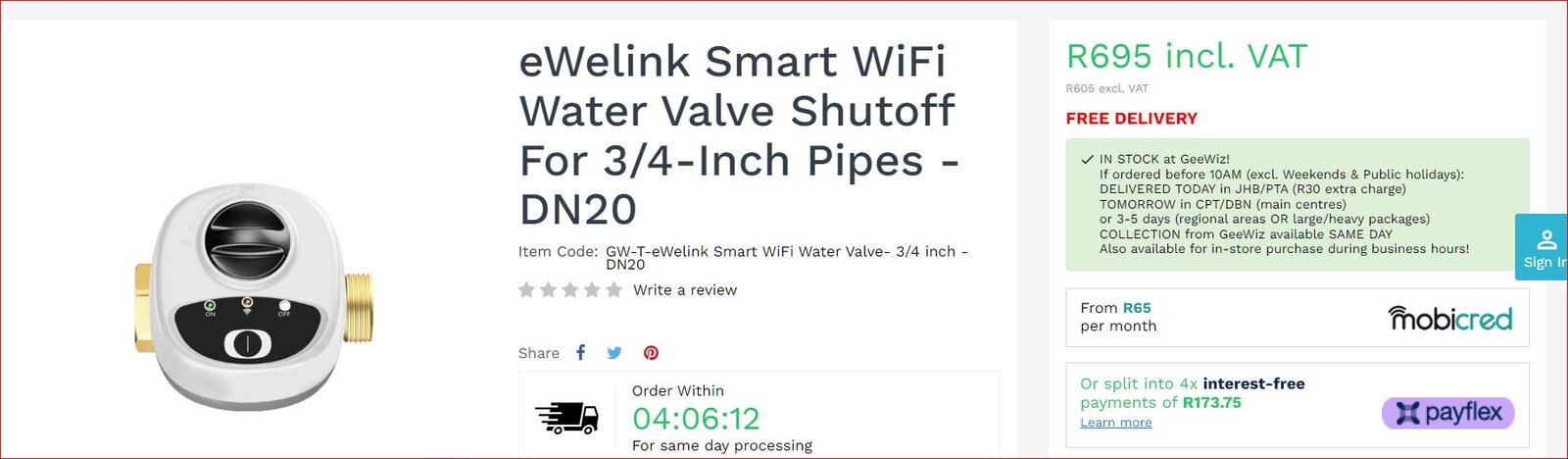
So now I have an idea to use an IOT device to simply open the valve that allows municipal supply straight through to the house. But with the valve for the pump supply left open, the municipal supply may push back against the pump.
I have had this situation (both valves open) before, but never for long. It seems to have not caused any problems. But if I leave it like that for hours? IDK.
Yep. I could get two of those IOT devices. But that means using one more 230V AC socket than I have available.
The 12 month warranty is expired now, so I’m not worried about voiding that (the conditions are many) but why punish that pump if I don’t have to?
Or I can call the plumber in and ask him to fit that change over valve. But wouldn’t he have done that if he could?
Hi Richard, I’m not sure which part of my post you are confirming.
The pump is just out of warranty, but I don’t want to inflict unecessary punishment upon it. The warranty conditions are quite strict. EG you may not use an “unapproved” extension lead to take power to the pump. You also may not remove the three prong plug it arrives with.
TBF, Jojo do provide support whilst the pump is under warranty. They have a team of mobile support guys who are knowledgable and usually packing a couple of spare pumps in their vehicle.
I’m a bit confused about how this pump is used.. Are you using it to maintain pressure whilst supplying water from your tank to the house and is this your regular operation?
If so how do you keep the tank filled with water?
PS: I have found on another forum that the OP launches into a scenario which he expects you to fully grasp but he hasn’t explained it..
OK… I have a backup water tank. The idea is that this is filled from the municipal supply. When the municipal supply goes down, then I switch over to the tank. This is where the pump comes in. It is on the output side of the tank, and provides enough pressure to feed water throughout the home.
Both the municipal supply and the output from the pump have isolating valves. The idea being that only one supplies the house at a time. The municipal supply actually has two isolators. One closes off the supply entirely, including to the tank. The second just stops municipal supply into the house. When I want to switch to the tank I should flip the isolators. Open the isolator between the pump and the house, close the isolator that allows municipal supply into the house.
But the water in the tank needs to be circulated and topped up, otherwise it will stagnate. The recommendation I was given by the plumber is to run the tank on weekends. That will cause enough circulation to keep the water inside the tank clean.
But I worry. The plumber who gave me this advice has more people in his household and a smaller tank. I went for 2.5 kl because that should keep our home going for a week, probably a bit more, if there is no municipal water. So I think I need to spend a bit more time turning over the contents of that tank.
So I tend to run off the tank during the day. My current MO is that the isolator for the municipal supply into the house stays closed, so we take water from the tank, and the tank gets topped up. I use a timer to stop the pump over night because I’m lazy and/or forgetful and don’t always flip the isolators and turn the pump off, and because the pump will sometimes run in the small hours.
So I am thinking of ways to have better control. One is to use an IOT device to control that isolator that allows municipal water into the home. Then we have pressure at night.
But I am inclining towards two IOT devices. I can turn the municipal supply on, turn the pump supply off, then kill the power to the motor. In the morning I need to turn the power on first, then toggle the isolators. This will keep me amused for a while, but it’s not perfect. Just less imperfect.
although I don’t have your problem, I bought these valve from geewiz. I use them to route hot solar geyser water to either the house / washing machine / dishwasher / gas geyser (winter time)
ja nee plumbing can be risky. years ago they tried to steal my brass tap in the front garden. fortunately I had secured the tap with long wall plugs into the wall. but they damaged the pipe right at the bottom at ground level. I had to dig the tar away and install a stopper. needless to say I had to install it before sunset otherwise I’d have no house water. that led me to install jojo tanks so I can shut off mains and still run pressurised water to my house while I effect repairs at my leisure.
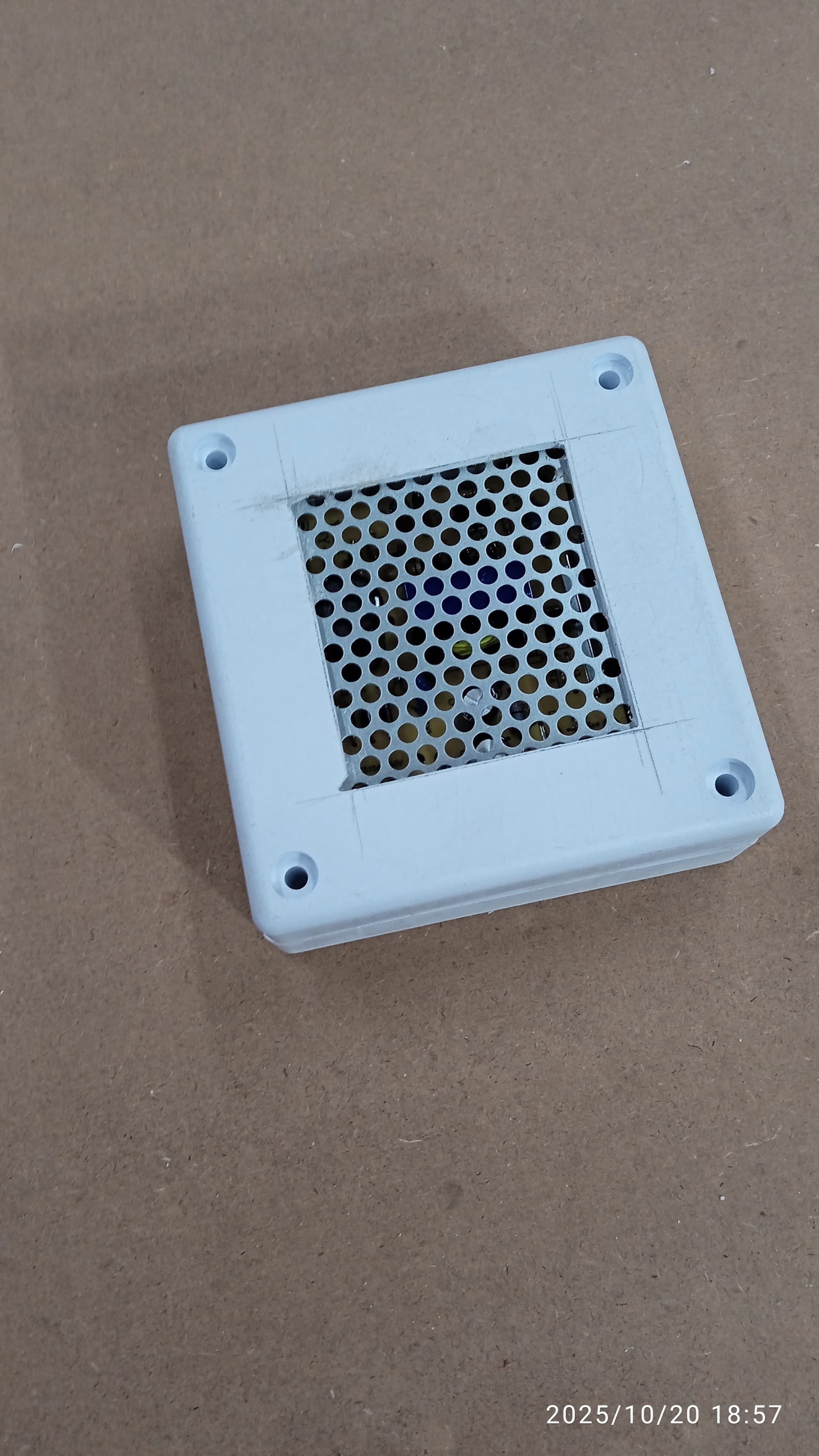
I battled a bit with the 5vdc power supply for these valves as I wanted them to run off my inverter setup and not off supplied USB charger. bought 2 x 220vac - 5vdc power supply from ACDC mounted one power supply in a barely suitable plastic box for the washing / dishwashing machines. the other 2 valves & power supply will be for the solar & gas geysers.
what I want is to prioritise the solar geyser temperature - this will then dictate where the summer time hot water goes to first eg. house and in winter it will re-route the solars luke warm water to gas geyser first to be boosted back to 65 degrees > then to house. this way I’ll always have hot water regardless of external influences.
same principle applies to the washing machine & dishwasher hot water - all depends on the solar geyser temp. just need to find a way to trigger the smart scene when I switch on the washing / dishwasher.